
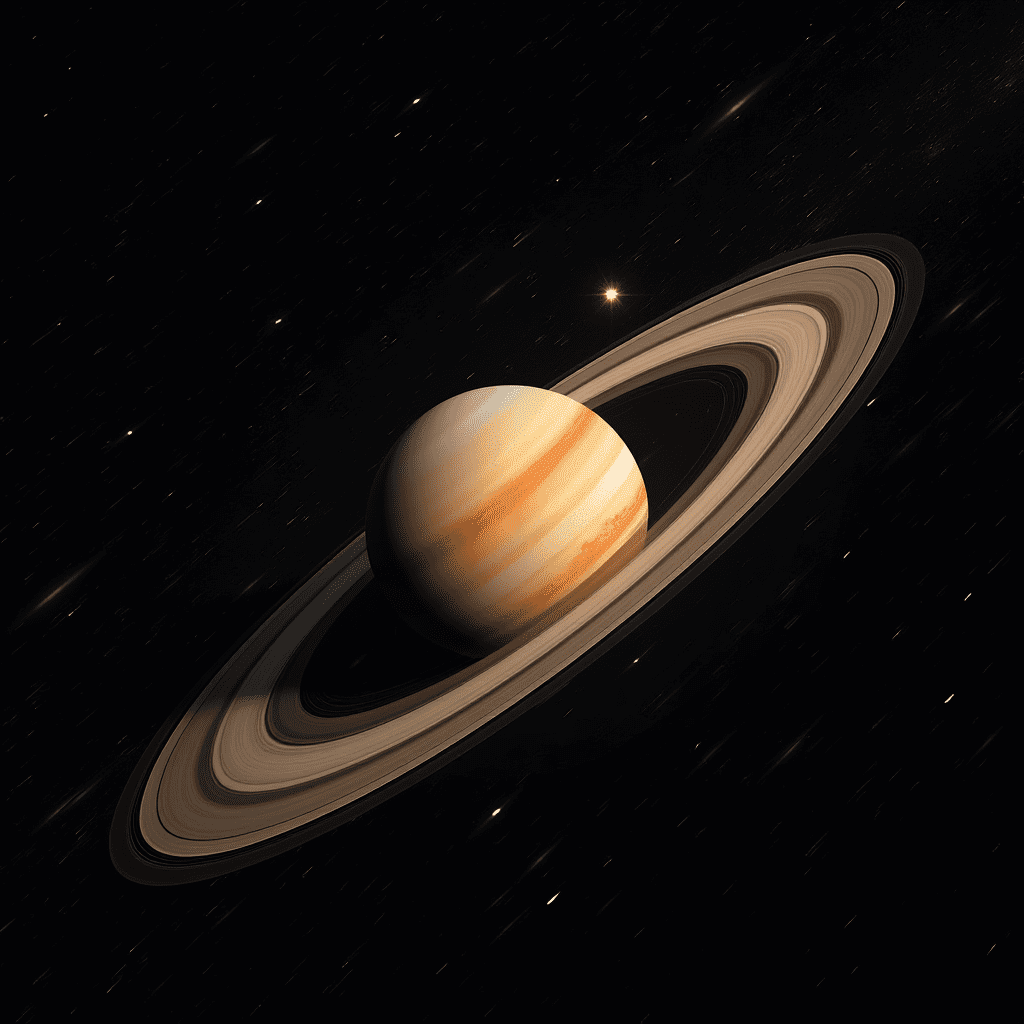
Picture this: our solar system, a vast cosmic ballroom. Planets pirouette around the sun, a dazzling, synchronized ballet. They all spin, almost in unison, in the same direction. Mercury, Venus, Earth, Mars, Jupiter, Saturn, Uranus, Neptune… a graceful, predictable waltz. But wait. There’s one dancer that’s utterly unique. One planet that’s decided to do its own thing, to spin… backwards.
This isn’t just a quirky habit; it’s a fundamental difference that sets it apart from every other planet in our cosmic neighborhood. It’s a planet shrouded in mystery, veiled in thick clouds that hide its true face from our telescopes. A planet that’s both Earth’s twin and its polar opposite. And its name is Venus.
Yes, Venus. Our dazzlingly bright neighbor, often called Earth’s sister planet due to its similar size and mass. But while they might look alike from afar, their destinies and behaviors are wildly divergent. One of the most striking differences? How they spin.
Think about our own planet, Earth. We spin counter-clockwise, a motion that gives us our day and night. Most of the other planets in our solar system follow this same convention. It’s as if the universe had a preferred direction for planetary rotation, a cosmic rule that most celestial bodies decided to abide by.
But Venus? Venus decided to rewrite the script. It rotates clockwise. In the astronomical world, this is called retrograde rotation. While most planets are spinning ‘forward’ relative to their orbit, Venus is spinning ‘backward’.
This seemingly small detail has profound implications. For starters, if you were ever to stand on the surface of Venus (which, spoiler alert, is highly inadvisable due to the extreme heat and crushing pressure), the sun would appear to rise in the west and set in the east! Imagine your morning coffee with a sunset view, and your evening tea with a sunrise surprise. It’s a topsy-turvy world.
Scientists have pondered this peculiar planetary behavior for centuries. Why is Venus so different? The leading theories involve some colossal, ancient event. Perhaps a giant impact early in the solar system’s history, a cataclysmic collision with another massive object that knocked Venus off its original spin and set it spinning in reverse.
Another possibility is that tidal forces from the sun played a significant role. Venus is relatively close to the sun, and the immense gravitational pull could have, over billions of years, slowed its initial rotation and eventually reversed it. It’s like a cosmic tug-of-war, where the sun gradually won, forcing Venus to change its tune.
The dense atmosphere of Venus also plays a role in its unique characteristics. It’s composed mostly of carbon dioxide, creating a runaway greenhouse effect that makes Venus the hottest planet in our solar system, even hotter than Mercury, despite being further from the sun. The clouds are made of sulfuric acid, reflecting sunlight and making Venus appear so bright in our night sky. But beneath those clouds is a world of crushing pressure and scorching temperatures, a stark contrast to our own habitable planet.
The slow rotation of Venus is also quite remarkable. A day on Venus (the time it takes to complete one rotation) is actually longer than its year (the time it takes to orbit the sun)! So, a single day on Venus lasts about 243 Earth days, while a Venusian year is about 225 Earth days. Talk about a long workday!
This slow, backward spin is a constant reminder of the chaotic and dynamic nature of our solar system’s formation. It suggests that the early days of our solar system were far from the orderly celestial dance we observe today. They were likely filled with violent collisions, gravitational shifts, and forces that shaped planets in ways we can only begin to comprehend.
Studying Venus isn’t just about satisfying our curiosity about a quirky planet. Understanding its unique rotation and atmospheric conditions can offer us invaluable insights into planetary evolution, climate change, and the potential for habitability on other worlds. By comparing Venus’s extreme environment to Earth’s, we can learn more about what makes our planet so special and how fragile that balance can be.
So, next time you look up at the night sky and see that brilliant, shining star – that’s Venus. Remember that behind that beautiful façade lies a world unlike any other. A world that spins backwards, defying the cosmic norm, a testament to the wild and wonderful diversity of our solar system. It’s a planet that keeps its secrets well-guarded, but every clue we uncover only makes its story more fascinating.
What other cosmic peculiarities do you know of? Share your favorite space facts in the comments below! Let’s explore the universe together, one mind-blowing fact at a time.