
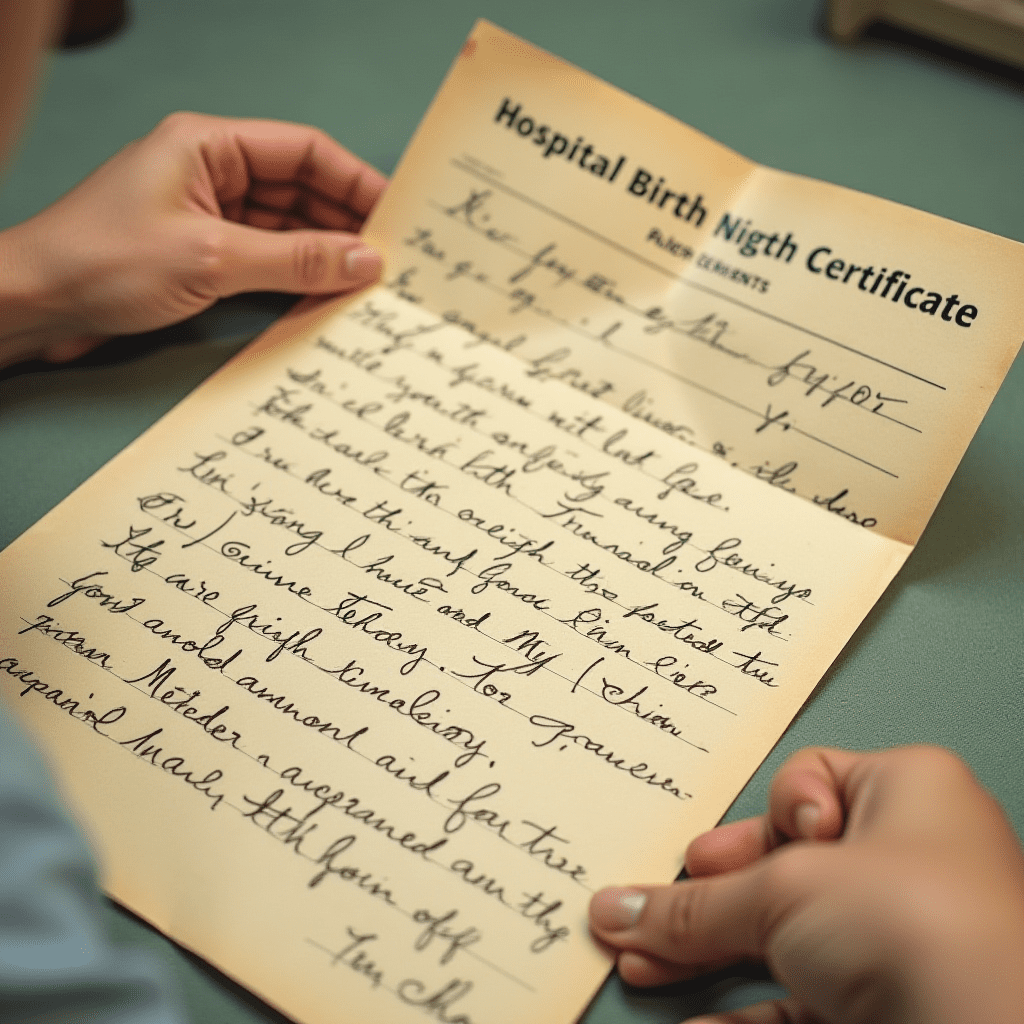
Imagine this: a young, struggling actress, facing a daunting medical bill, receives an unimaginable act of kindness from one of history’s most revered figures. Sounds like the plot of a Hollywood movie, right? Well, for years, a story like this has been circulating online, connecting the iconic Dr. Martin Luther King Jr. with a then-unknown Julia Roberts.
The tale, shared across social media platforms and whispered in online forums, paints a picture of Dr. King, moved by the plight of a young Julia Roberts, stepping in to cover her hospital expenses. It’s a beautiful narrative, a testament to compassion and the enduring legacy of Dr. King. But as with many viral stories, especially those that tug at our heartstrings, the question inevitably arises: is it true?
Let’s be honest, the thought of Dr. Martin Luther King Jr. personally intervening to help a budding Hollywood star like Julia Roberts is incredibly compelling. It speaks to a generosity of spirit that we often associate with his monumental work for civil rights and human dignity. It’s the kind of story that makes you feel a little bit better about the world, a little bit more hopeful about the inherent goodness of people.
The internet, as we all know, is a breeding ground for fascinating anecdotes. Some are meticulously documented historical facts, while others are charming embellishments that gain traction through sheer repetition. This particular story about Dr. King and Julia Roberts falls into a fascinating gray area, one that has sparked countless discussions and debates.
So, how did this story even begin? Like many internet legends, its origins are a bit murky. It seems to have started gaining significant steam in the early days of social media, appearing on various sharing platforms and gaining momentum with each retweet and share. The narrative often involves a scenario where Julia Roberts’ mother was hospitalized, and the medical bills were overwhelming. Then, somehow, word reached Dr. King, who, deeply moved, decided to help.
The details, when they are provided, are often vague. Sometimes it’s mentioned that Dr. King was a friend of Julia’s father, Walter Roberts, who was a theater owner. Other versions suggest a more indirect connection. The core of the story, however, remains consistent: Dr. King’s benevolent act of paying a significant hospital bill for the Roberts family.
The appeal of this story is undeniable. It juxtaposes two figures who, in the public consciousness, exist in very different spheres. On one hand, we have Dr. Martin Luther King Jr., the Nobel Peace Prize laureate, the orator, the champion of nonviolent resistance, a titan of the American Civil Rights Movement. On the other, we have Julia Roberts, the vivacious, Oscar-winning actress, a symbol of modern Hollywood stardom.
The idea that these two figures, separated by profession and background, could be linked through an act of personal generosity is, frankly, magical. It’s the kind of narrative that transcends typical celebrity gossip or historical accounts. It speaks to a shared humanity, a connection that proves kindness knows no social or professional boundaries.
But here’s where we need to put on our detective hats. When a story becomes this widespread, especially one involving prominent public figures, the natural next step is to look for verifiable evidence. And this is where things get interesting.
Despite the widespread sharing of this anecdote, extensive research and attempts to verify the story have yielded no concrete proof. There are no credible news reports from the time, no documented accounts from Dr. King’s own writings or speeches, and crucially, no confirmations from Julia Roberts or her family. In fact, when questioned about this story, those closest to Julia Roberts have often expressed confusion or denied its veracity.
This doesn’t necessarily mean it’s entirely fabricated. Sometimes, the truth can be more complex, a blend of fact and fiction that morphs over time. It’s possible there was a misunderstanding, a partial truth that was amplified, or perhaps a story with similar elements that got conflated with Julia Roberts and Dr. King.
For instance, it’s a known fact that Julia Roberts’ parents, Walter and Betty Roberts, did indeed own a children’s theater in Atlanta, Georgia. Dr. King and his family were also active in Atlanta and involved in community initiatives. It’s conceivable that there might have been some distant acquaintanceship or a shared connection within the community. However, a direct financial intervention by Dr. King for a specific hospital bill for Julia Roberts remains unsubstantiated.
The power of this story, even without concrete proof, lies in what it *represents*. It reflects our collective desire to see the good in prominent figures, to believe in acts of selfless generosity, and to find connections between seemingly disparate worlds. Dr. King’s legacy is one of profound compassion and a belief in the inherent worth of every individual. This story, whether factual or not, taps into that very essence.
It’s a beautiful aspiration, isn’t it? To imagine a world where figures like Dr. King, who dedicated his life to uplifting others, would extend that same spirit of care to individuals outside his immediate sphere of activism. It resonates with our innate human need for kindness and solidarity.
Perhaps the enduring appeal of this story is a testament to our admiration for both Dr. King’s boundless empathy and Julia Roberts’ ascent to stardom. It creates a poignant “what if” scenario that captures our imagination. It’s the kind of story that makes you pause and think, “Wow, that would be amazing if it were true.”
So, while the tale of Martin Luther King Jr. paying Julia Roberts’ hospital bill remains firmly in the realm of heartwarming legend rather than documented fact, its persistence speaks volumes. It highlights the power of narrative, the way stories can shape our perceptions and inspire us, even when their factual basis is questionable.
It’s a reminder that sometimes, the most powerful stories are the ones that resonate with our deepest hopes and values. And in a world that can often feel divided, the idea of such profound, cross-generational, and cross-professional kindness is something truly worth holding onto, even if it’s just a beautiful myth. What do you think? Does the absence of proof diminish the power of the story for you?