Picture this: you’re at a picnic, the sun is shining, and someone pulls out a bowl overflowing with vibrant red strawberries. Delicious, right? Now, imagine someone else offers you a perfectly ripe banana. Equally delightful. But what if I told you that one of these beloved fruits is a botanical berry, and the other… well, it’s not?
Prepare yourself, because we’re about to shatter your fruit-related reality. The humble banana, that convenient snack you grab on the go, is actually a berry. Yes, you read that right. A berry. And that sweet, juicy strawberry you adore? Botanically speaking, it’s not a berry at all.
This isn’t some quirky internet meme or a joke designed to make you question everything you know about grocery store aisles. This is straight-up science, folks. The way we casually categorize fruits in everyday conversation is wildly different from the precise definitions used by botanists. And honestly, once you understand it, you’ll never look at a fruit salad the same way again.
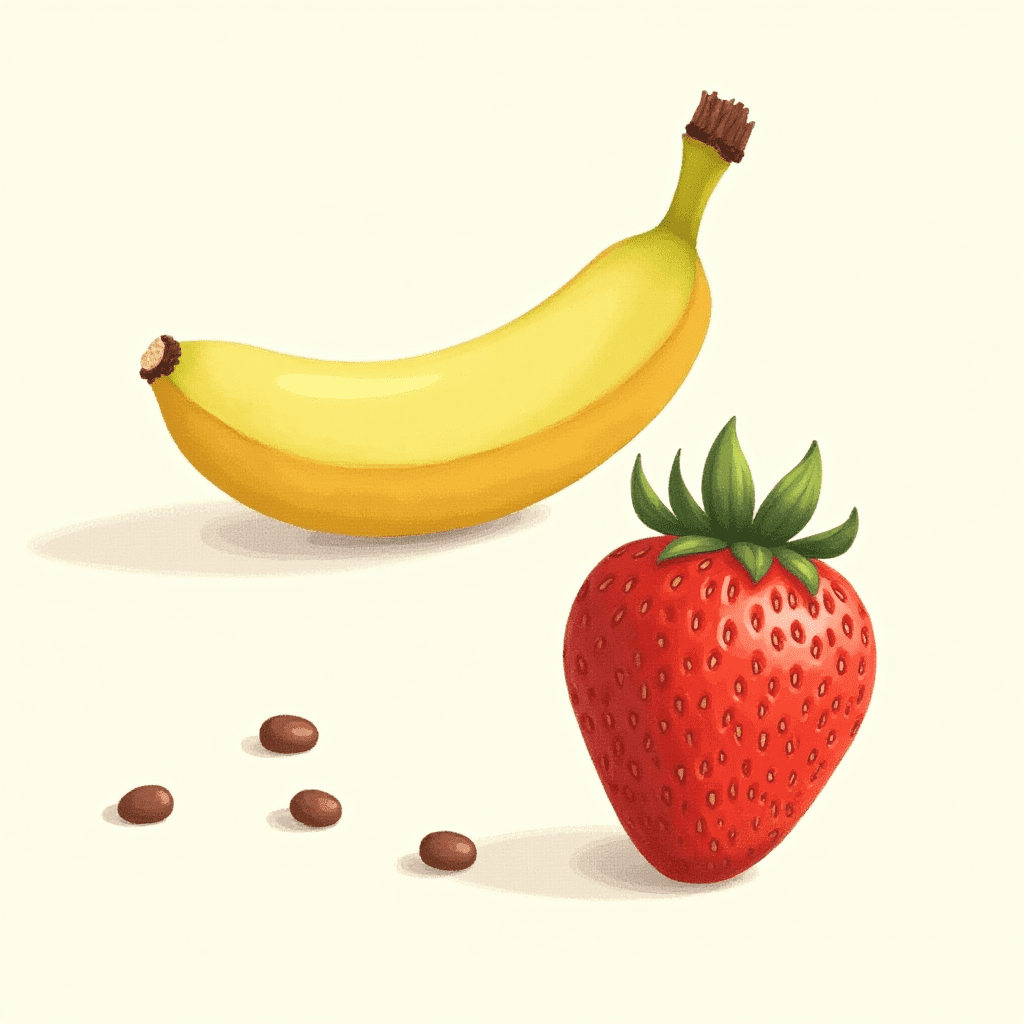
Let’s start with the banana. What makes a fruit a berry, according to the botanical world? It’s all about where the fruit develops and how many seeds it contains. A true berry develops from a single flower with a single ovary. It’s fleshy, typically contains multiple seeds (though some cultivated varieties, like our beloved bananas, have been bred to have tiny, unnoticeable seeds), and its entire pericarp – that’s the fruit wall – is fleshy.
Think about a banana: it grows from a flower, has a soft, fleshy interior, and even though the seeds are tiny and practically invisible in the ones we buy, they are there in its wilder ancestors. It fits the bill perfectly. It’s a mega-berry, if you will, a testament to nature’s sometimes odd but always fascinating classifications. So next time you peel a banana, give a little nod to its berry status.
Now, let’s tackle the strawberry. This is where things get really interesting, and a little confusing for the everyday fruit lover. Strawberries are technically classified as aggregate fruits. Huh? What does that even mean?
An aggregate fruit develops from a single flower that has *multiple* ovaries. These ovaries then mature into small, fleshy drupelets that cluster together. Each of those little seed-like specks on the outside of a strawberry? Those are actually the ovaries of the original flower, each containing a tiny seed. The fleshy, red part we love to eat? That’s the swollen receptacle of the flower, not the ovary itself.
So, while a strawberry might look like the quintessential berry, its development tells a different story. It’s a delicious, delightful deception by nature. It’s like a fruit imposter, masquerading as a berry but secretly being something else entirely. And it’s a common misconception that plagues many of us who grew up thinking plump, red strawberries were the ultimate example of berry perfection.
This botanical confusion isn’t exclusive to bananas and strawberries. Plenty of other fruits have surprising classifications. For instance, watermelons and cucumbers are botanically berries. Yep, that juicy watermelon you’re slicing at a summer barbecue? Berry. That crisp cucumber in your salad? Also a berry. It all comes back to the development from a single ovary and the fleshy pericarp.
And what about things we *think* are berries? Raspberries and blackberries? Those are aggregate fruits, just like strawberries, developing from flowers with multiple ovaries. So, in a strange twist of fate, raspberries and blackberries are more closely related, botanically, to strawberries than they are to bananas or blueberries.
Blueberries, on the other hand, are true berries. So are cranberries, grapes, and even avocados! Yes, the creamy, green avocado you mash onto your toast is, in fact, a single-seeded berry. Mind. Blown.
This whole discussion is a fantastic reminder that common names and scientific classifications often diverge. We use language to simplify the world, and sometimes those simplifications lead us astray when we try to apply them to the intricate details of nature. Understanding this can be a lot of fun, especially when you’re sharing fun facts with friends and family.
Imagine the next time you’re at the farmer’s market, or even just at the supermarket, picking out your fruit. Think about the banana, a true berry. Think about the deceptively non-berry strawberry. Consider the watermelon, a berry in disguise. It adds a whole new layer of appreciation for the diversity and wonder of the plant kingdom.
So, why does all this matter? Well, for starters, it’s incredibly interesting! It’s a peek behind the curtain of the natural world, revealing that things aren’t always what they seem. It’s also a great way to engage with people, spark curiosity, and maybe even win a few friendly debates about fruit.
Plus, knowing these little tidbits can make you feel a bit more knowledgeable, a bit more connected to the science behind the food we eat. It’s a small piece of trivia that can bring a lot of enjoyment and conversation. Who knew that a simple fruit could be such a gateway to botanical wonders?
Next time you’re enjoying a banana, remember its berry lineage. And when life gives you strawberries, appreciate them for the delicious aggregate fruits they are. It’s a fruity journey of discovery, and the best part is, it’s all edible!
The world of fruits is vast and full of surprising truths. From the humble banana’s berry status to the strawberry’s complex classification, there’s always something new to learn. Embrace the botanical weirdness, share the knowledge, and enjoy the delicious fruits that nature has to offer, no matter what they’re officially called.