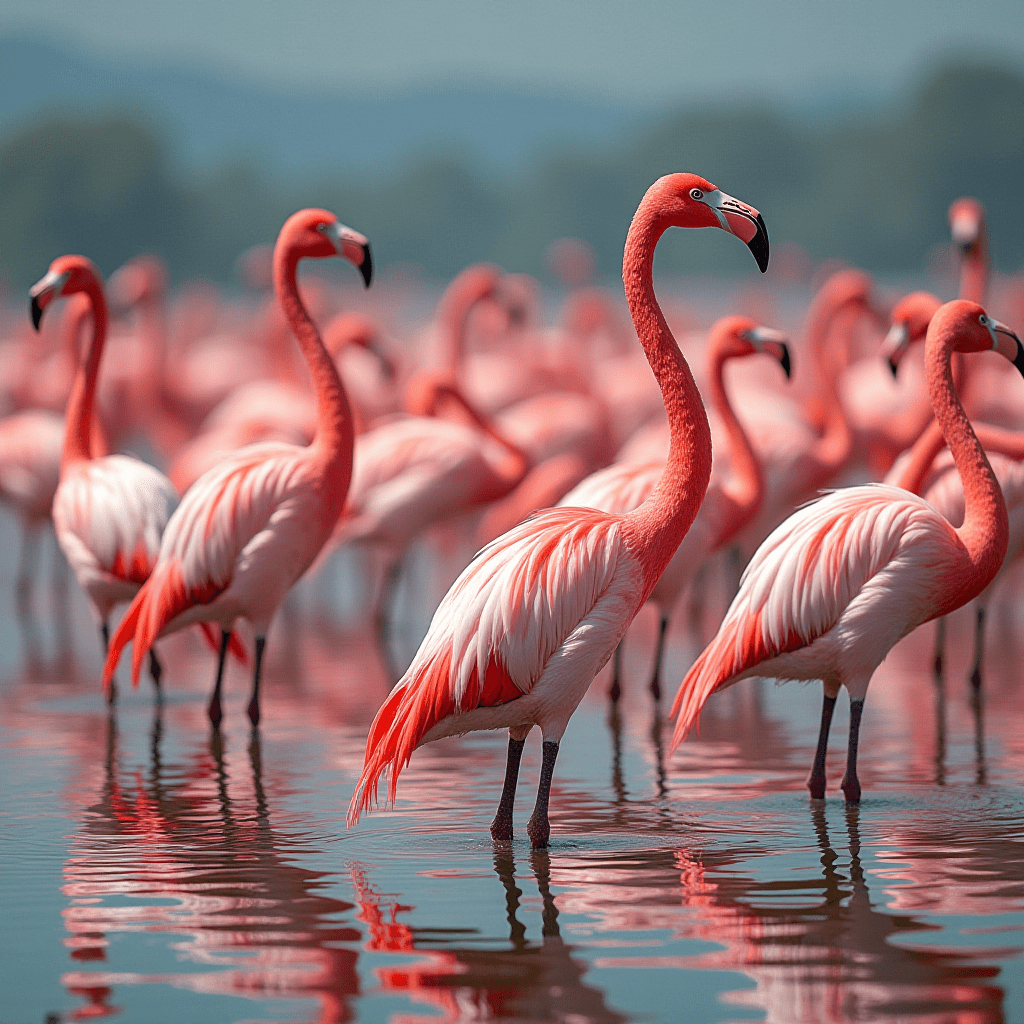
Imagine this: a shimmering expanse of water, kissed by the dawn. And then, a ripple of colour. Not just any colour, but a blush, a fuchsia, a vibrant coral that seems to breathe life into the very air. They stand, impossibly elegant, neck arched, a living, breathing masterpiece. And they aren’t just a few. They are many. Hundreds, perhaps thousands, a sea of pink that stretches as far as the eye can see. This, my friends, is not merely a gathering. This is a spectacle.
You might have heard it whispered, a delightful little tidbit of ornithological trivia. A group of flamingos is called a ‘flamboyance’. Say it aloud. Flamboyance. It rolls off the tongue, doesn’t it? It’s more than just a word; it’s an emotion, a feeling, a perfectly captured essence of these extraordinary birds. And honestly, if any creature on this planet deserved a name this utterly fabulous, it’s the flamingo.
Think about it. The word ‘flamboyance’ itself conjures images of extravagance, of bold colours, of unapologetic display. It speaks of something ostentatious, yet undeniably beautiful. It’s a word that suggests a certain flair, a confident presence that demands attention. And who embodies all of this more than a flamingo?
These birds are not shy wallflowers. They are the divas of the avian world. Their very existence is a statement. Their colour, derived from their diet of brine shrimp and algae, is a testament to their unique lifestyle. They don’t blend in; they stand out. They don’t whisper; they announce themselves with every graceful, if sometimes wobbly, step.
The flamingo’s journey to that iconic pink is a story in itself. Newly hatched chicks are a dull grey or white. It’s through a meticulous, and frankly, delicious, diet that they begin to acquire their signature hue. The more beta-carotene they consume, the brighter their feathers become. So, in a way, a flamingo’s flamboyance is earned. It’s a badge of honour, a colorful testament to a well-lived life, filled with the right kind of snacks.
And when you see them gathered, it’s not just a visual feast. There’s a social dynamic at play. Flamingos are highly social creatures. They roost in large colonies, sometimes numbering in the tens of thousands. This isn’t just for company; it’s for safety, for breeding success, and for the sheer joy of communal living. Imagine the conversations, the squawks, the shared dances that must take place within a single flamboyance.
Picture the scene at dawn in a vast salt flat or a shallow lagoon. A flamboyance of flamingos begins to stir. Some are preening their magnificent feathers, ensuring every single pink filament is perfectly in place. Others are already wading, their long, slender legs moving with an almost balletic grace, heads dipping below the surface in their quest for food. The air is filled with the gentle sounds of their community, a symphony of nature’s most vibrant performers.
There’s a certain power in that collective presence. When you witness a flamboyance, you understand why the name fits so perfectly. It’s not just about the individual beauty of each bird, though they are undeniably stunning. It’s about the impact of them together. The sheer, overwhelming beauty of their unity. The way they amplify each other’s colour, creating an almost surreal landscape.
It’s easy to see how the word ‘flamboyant’ became associated with them. It means tending to attract attention because of confidence, exuberance, and stylishness. Does that not sound like a flamingo, especially when you consider them as a group? Their synchronized movements during courtship rituals, their striking colour palette against the backdrop of their environment – it’s all pure, unadulterated flamboyance.
Consider the Great Flamingo migration. Imagine thousands upon thousands of these birds taking to the skies, a pink river flowing across the clouds. It’s a sight that would make even the most jaded traveler gasp. And when they land, settling into their new watery homes, they form these incredible, sprawling communities. A true flamboyance, ready to dine, to dance, and to simply be magnificent.
The word ‘flamboyance’ also evokes a sense of celebratory display. And in a way, a flamboyance of flamingos is a continuous celebration of life, of colour, and of the simple act of existing vibrantly. They don’t apologize for their brightness or their numbers. They simply are, in all their glorious, pink-hued splendor.
So, the next time you see a picture or a video of these incredible birds, remember their special name. A group of flamingos isn’t just a flock, or a herd, or a gaggle. It’s a flamboyance. It’s a testament to the power of collective beauty, the joy of unapologetic colour, and the sheer, dazzling wonder of nature’s most extravagant performers. It’s a word that perfectly captures their spirit, their aesthetic, and their undeniable presence. Isn’t nature just the most wonderfully creative artist?
It makes you wonder about other collective nouns, doesn’t it? Are there other animals out there deserving of equally evocative names? Perhaps a ‘giggle’ of otters or a ‘whisper’ of butterflies? But for now, let’s just revel in the perfection of a flamboyance. It’s a reminder that sometimes, the most accurate description is also the most beautiful. And in the world of flamingos, beauty is always in abundance.