Scroll-stopping? How about mind-bending? What if a writer, sitting in his study, penned a story so terrifyingly accurate about a disaster that wouldn’t occur for over a decade, that it sends shivers down your spine even today?
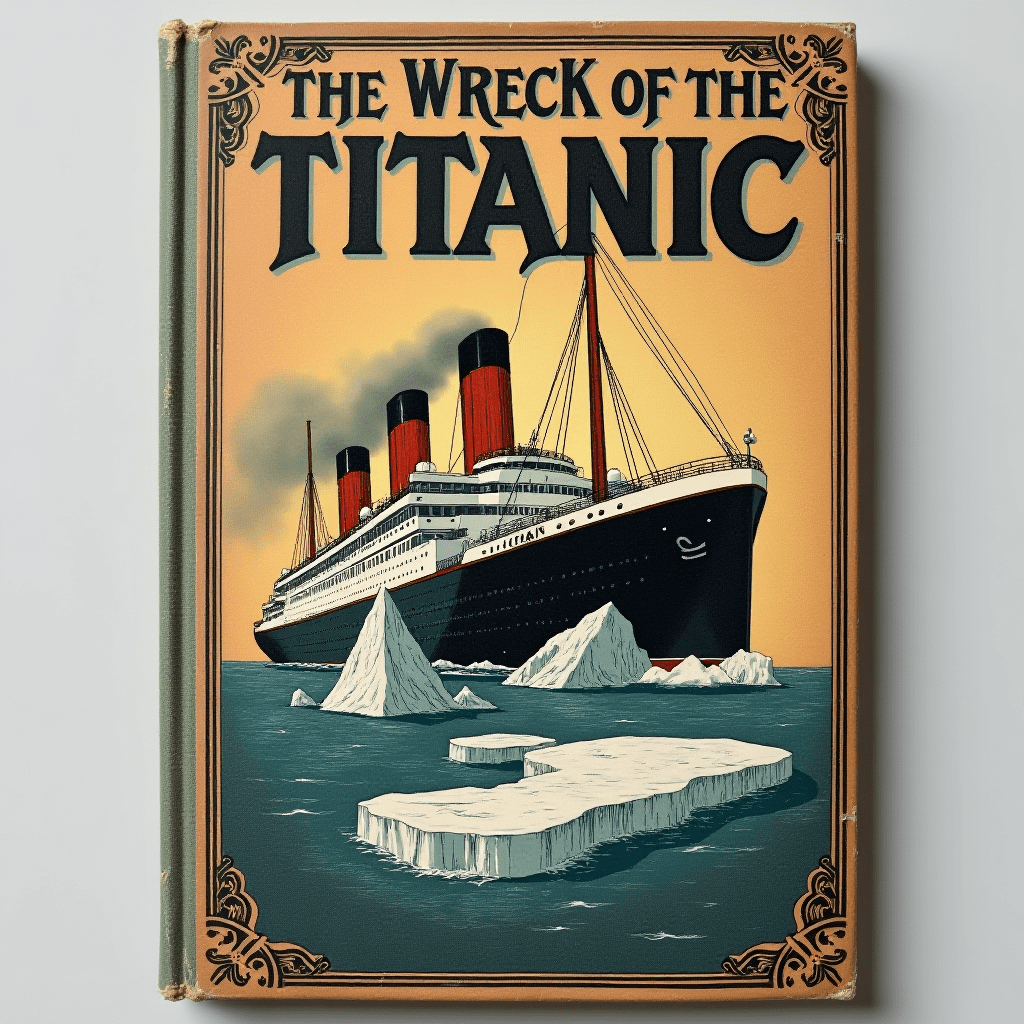
This isn’t a tale of ancient prophecies or mystical visions. This is the story of Morgan Robertson, an American author, and his novel, ‘Futility,’ later retitled ‘The Wreck of the Titan.’ Published in 1898, the book’s plot would eerily foreshadow the sinking of the RMS Titanic, a ship that wouldn’t even be conceived until years later.
Robertson was no stranger to the sea. He was a former merchant sailor, and his intimate knowledge of maritime life, coupled with a vivid imagination, fueled his writing. But ‘Futility’ was something else entirely. It wasn’t just a sea yarn; it was a chilling premonition.
The novel tells the story of the ‘Titan,’ a colossal, unsinkable passenger liner, the largest ship ever built. Sound familiar? The parallels began to stack up almost immediately.
Robertson described the ‘Titan’ as a marvel of modern engineering, deemed virtually indestructible. Its maiden voyage, much like the Titanic’s, was set for the frigid month of April, across the unforgiving North Atlantic.
And then came the fateful collision. The ‘Titan,’ sailing too fast through a calm, clear night, struck an iceberg. The result was catastrophic. The ship, despite its supposed invincibility, began to sink.
The similarities didn’t end there. Robertson’s fictional liner was described as lacking sufficient lifeboats for all its passengers. This shocking oversight would become a horrifying reality for the real Titanic.
He even detailed the ship’s immense size, its luxurious appointments, and the hubris of its creators and passengers who believed it could conquer any challenge. The ‘unsinkable’ myth was central to both the fiction and the impending tragedy.
The ‘Titan’ sank in the cold waters of the North Atlantic, taking with it many souls. The real Titanic, a ship that would become a legend for all the wrong reasons, would meet a strikingly similar fate, also in the month of April.
When the RMS Titanic struck an iceberg on April 14, 1912, and sank in the early hours of April 15, the world was stunned. But for those who remembered Robertson’s ‘Futility,’ a chilling realization dawned.
The details were uncanny. The ship’s name, ‘Titan,’ was remarkably close to ‘Titanic.’ The timeline—a spring maiden voyage across the Atlantic. The cause of the sinking—an iceberg. The insufficient number of lifeboats. Even the speed at which the ships were traveling.
Robertson’s fictional ship was 800 feet long; the Titanic was 882 feet. The ‘Titan’ carried 3,000 passengers; the Titanic had over 2,200 on board. The ‘Titan’ was lost in April; the Titanic sank in April. The ‘Titan’ was described as the largest ship in the world; the Titanic held that title.
It’s important to note that Robertson’s novel wasn’t a psychic prophecy in the mystical sense. He was a keen observer of maritime trends and understood the potential dangers lurking beneath the surface of technological advancement. He was predicting the logical outcome of building ever-larger, faster ships, pushing the boundaries of safety with a dangerous sense of overconfidence.
However, the sheer number and specificity of the coincidences are, to say the least, unsettling. It’s a stark reminder that sometimes, fiction can hold a mirror to reality in the most unexpected and profound ways.
Did Morgan Robertson possess some extraordinary foresight? Or was he simply a brilliant writer who brilliantly extrapolated the prevailing attitudes and potential risks of his era? The story of ‘Futility’ and its uncanny resemblance to the Titanic disaster continues to fascinate and provoke discussion.
It makes you wonder what other warnings might be hidden within the pages of literature, waiting for us to uncover them. It’s a story that certainly makes you look twice at the narratives that shape our understanding of the world and the potential consequences of our actions.
Share this if it gave you chills! What are your thoughts on this incredible prediction? Let us know in the comments below!