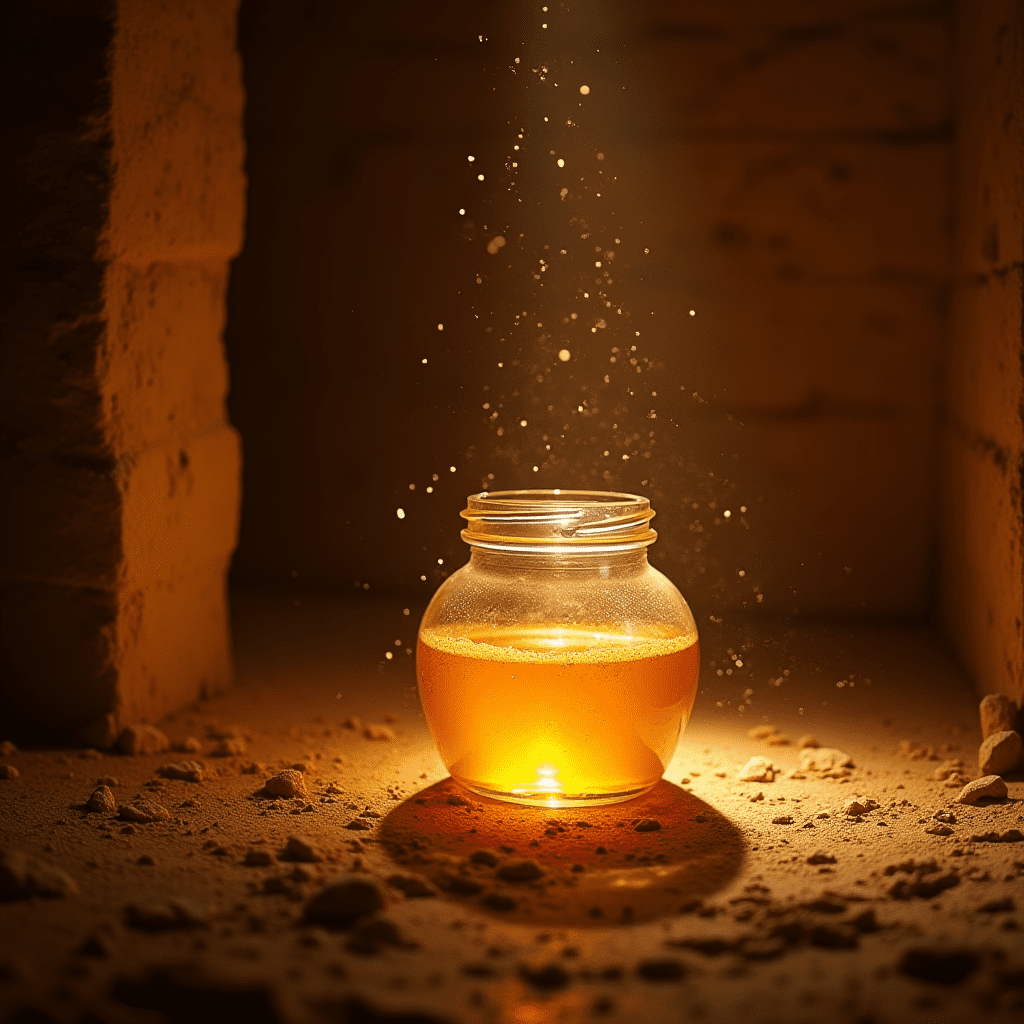
Picture this: You’re rummaging through your grandmother’s attic, dust motes dancing in the slivers of sunlight. Among forgotten heirlooms and faded photographs, you stumble upon a small, unassuming jar. The label is almost illegible, the contents a dark, viscous amber. You hesitate. It looks ancient, perhaps even…off. But then, a thought sparks: could this be food that *actually* lasts forever?
This isn’t a scene from a fantasy novel. It’s a very real possibility, and it all hinges on one of nature’s most extraordinary creations: honey.
We’ve all been there, staring into the pantry, checking expiration dates on jars and containers. Yogurt? Definitely past its prime. That half-eaten bag of chips? Probably stale. But honey? That golden elixir, harvested from the tireless work of bees, carries a secret that defies time itself.
It’s true. Honey, in its purest form, never spoils. Ever.
Think about it. We’re talking about a food that archaeologists have found in ancient Egyptian tombs, perfectly preserved, thousands of years old, and still edible. Imagine tasting a sweetness that has witnessed empires rise and fall, that has been enjoyed by pharaohs and peasants alike. It boggles the mind, doesn’t it?
So, what’s the secret sauce, or rather, the secret nectar that gives honey its incredible longevity? It’s not magic, though it certainly feels like it. It’s a combination of fascinating scientific properties that create an environment so hostile to microorganisms, they simply can’t survive.
First, let’s talk about sugar. Honey is incredibly concentrated in sugar. We’re talking about a very high sugar content, with low water activity. This means that any bacteria or yeast that might try to take root in the honey are essentially dehydrated. It’s like putting them in a tiny, sugary desert where they can’t possibly thrive.
Then there’s the pH. Honey is naturally acidic, with a pH typically between 3.2 and 4.5. Most bacteria that cause spoilage prefer a more neutral environment. The acidity of honey creates yet another barrier, making it a very unwelcoming place for unwanted guests.
But the real star of the show, the unsung hero of honey’s eternal shelf life, is an enzyme that bees add to the nectar. When bees collect nectar from flowers, they regurgitate it and pass it through their bodies, adding an enzyme called glucose oxidase. When honey is exposed to a small amount of moisture, this enzyme breaks down glucose into gluconic acid and hydrogen peroxide.
Yes, hydrogen peroxide. That’s the same stuff we use to clean cuts and scrapes. In the low concentrations found in honey, it acts as a natural preservative, further inhibiting the growth of any potential spoilage organisms.
It’s a multi-pronged attack on spoilage, orchestrated by nature itself. The high sugar concentration, the acidity, and the enzymatic production of hydrogen peroxide all work in harmony to create a food that is, for all intents and purposes, immortal.
Now, you might be thinking, “But sometimes my honey gets crystallized! Does that mean it’s spoiled?”
Great question! Crystallization is a natural process that happens to most types of honey. It’s simply the glucose separating from the water and forming crystals. It doesn’t mean the honey has gone bad; it’s just changed its texture. And the best part? You can easily reverse it.
Simply place the jar of crystallized honey in a bowl of warm (not boiling!) water. The gentle heat will dissolve the crystals, and your honey will be smooth and pourable again. It’s like a spa treatment for your ancient sweetener.
This incredible property of honey has been recognized for millennia. Ancient civilizations understood its value not just as a sweetener, but as a potent medicinal and preservative agent. It was used in wound dressings, in cosmetics, and as a way to preserve other foods.
Imagine the peace of mind that comes with knowing you have a jar of pure, unadulterated honey in your pantry. It’s a testament to the power and ingenuity of the natural world. It’s a reminder that some things, with the right conditions, can truly stand the test of time.
So next time you’re enjoying a spoonful of honey, take a moment to appreciate its extraordinary nature. It’s more than just a sweet treat; it’s a culinary artifact, a historical marvel, and a testament to the enduring power of nature’s perfect preservative.
This is why when you see that seemingly ancient jar tucked away in your cupboard, you can be confident that its sweetness is as timeless as the bees that created it. It’s a little bit of edible history, ready to be savored, whenever you are. And that, my friends, is a truly sweet deal.
What do you think of this amazing fact about honey? Have you ever found an old jar of honey? Share your stories in the comments below and let’s celebrate this incredible natural wonder together!