
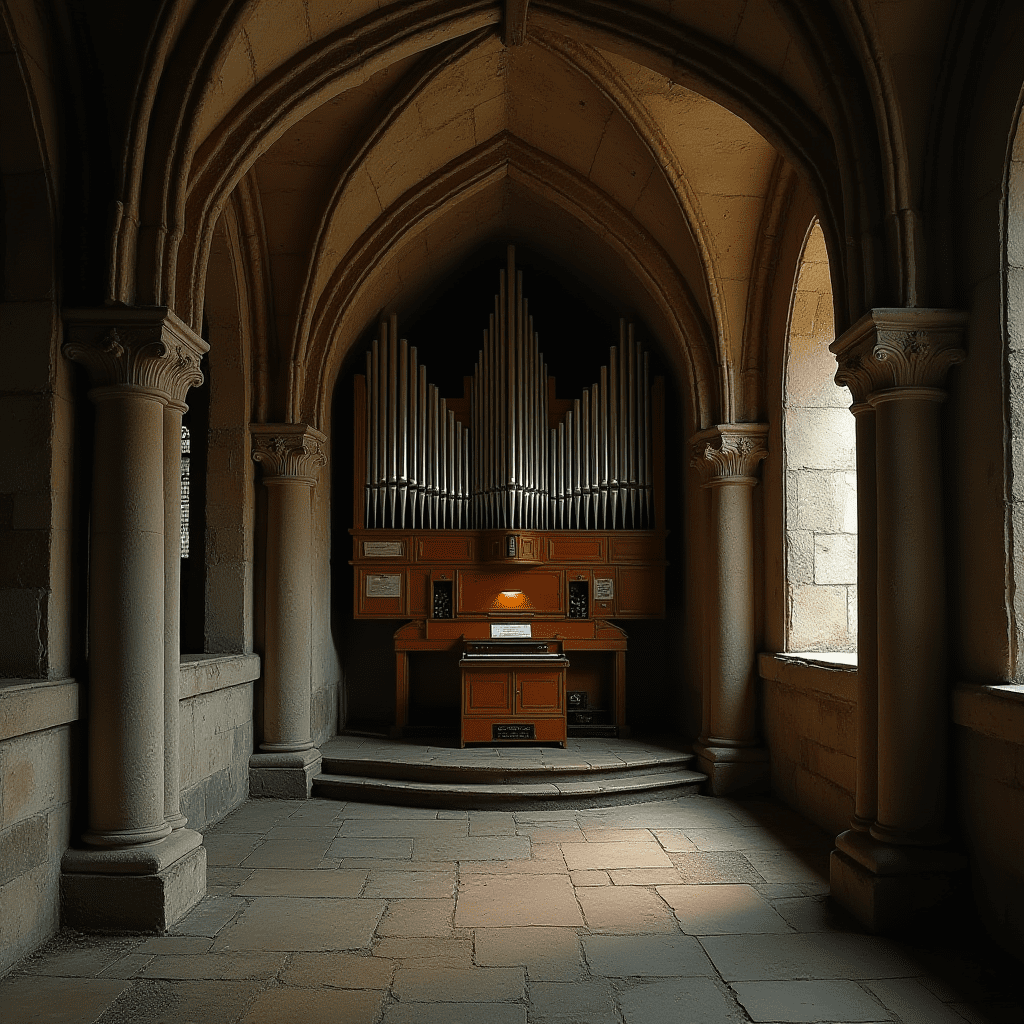
Picture this: a single note, held for years. Not just a sustained hum, but a deliberate, carefully composed sound that echoes through seasons, through generations, through the very fabric of time. It sounds like something out of a fantastical dream, doesn’t it? A concert so epic, so monumental, that its final chord will resonate in the year 2639. Yes, you read that right. The world’s longest concert is not a myth; it’s a reality, and it’s happening right now, in a quiet corner of Germany.
This isn’t your average music festival. There are no mosh pits, no overpriced water bottles, and certainly no encore demands after a few hours. This is the ASLSP project, which stands for ‘As Slow as Possible’. And believe me, they are taking that instruction very, very seriously.
The venue itself is a work of art, designed to house this unprecedented musical endeavor. Located in the small town of Halberstadt, Germany, the concert takes place within the St. Burchardi Church. The church, a historical landmark, provides a fittingly grand and solemn backdrop for this extraordinary sonic experiment.
So, what exactly are we listening to? The piece being performed is a composition by the avant-garde American artist John Cage. Cage was known for his unconventional approach to music, often exploring silence and chance. But for ASLSP, he simply wrote the title: ‘As Slow as Possible’. This gave the performers and organizers immense freedom to interpret just how slow ‘as slow as possible’ truly is.
The Halberstadt performance began in 2001. Can you even imagine? It started with a silent week, followed by the first organ note. This note was held for a considerable amount of time, setting the stage for the glacial pace that was to come. And when I say glacial, I mean it. The current note, for instance, is expected to be held for several years before the next change occurs. It’s a testament to patience, to endurance, and to a completely different way of experiencing music.
The ASLSP concert is not just about sound; it’s about the experience. It’s about engaging with time in a way that is almost alien to our hurried modern lives. Think about it: while you’re scrolling through your phone, listening to this concert, a single note is unfolding imperceptibly in a church hundreds of years in the future.
The instrument chosen for this marathon performance is a specially constructed organ. Its mechanics are designed to accommodate the incredibly long durations between note changes. The bellows are powered by weights that descend slowly, and the pipes are designed to minimize any audible fluctuations. It’s a marvel of engineering as much as a musical performance.
The lifespan of the concert was determined by a calculation based on the lifespan of the organ itself and the lifespan of the building. The chosen end date, 2639, is not arbitrary. It represents a point where the instrument and the structure are projected to be able to continue the performance. It’s a commitment that transcends the lives of everyone involved in its creation and execution.
What drives people to create something like this? It’s a question that has always fascinated artists and philosophers. For Cage, it was about challenging our perceptions of music, sound, and time. He famously said, ‘I have no interest in music that is not being played.’ The ASLSP project takes that idea to its absolute extreme. It’s about the potential of music, the idea of a sound that exists in perpetuity, even if in a form we can barely comprehend.
The ASLSP concert has become a pilgrimage for many. People travel from all over the world to witness this slow unfolding of sound. They come to experience the quietude of the church, the subtle shifts in atmosphere, and the profound sense of continuity. It’s a way to connect with a project that is larger than any individual, a project that speaks to the enduring power of art and human endeavor.
Imagine the conversations happening in that church. Visitors might sit in quiet contemplation, listening to a note that has been sounding for a year. They might discuss the future, the past, the meaning of existence, all while the organ hums its steady, unwavering song. It’s a space that encourages introspection and a deep appreciation for the present moment, even as it’s tied to a distant future.
The project is funded through donations and the sale of small musical fragments. When a note changes, a small piece of the organ pipe is sometimes given to donors. It’s a way for people to own a tangible piece of this historic, ongoing performance. It’s a reminder that even in the slowest of processes, there are moments of change and evolution.
As the concert progresses, new notes will be introduced, and old ones will fade. The composition will slowly evolve, a sonic tapestry woven over centuries. Each change, no matter how subtle, will be a significant event, marking a new chapter in this epic musical saga. Future generations will be able to follow the progression of the piece, tracing its development through time.
This 639-year concert isn’t just a curiosity; it’s a profound statement about art, dedication, and the human capacity for long-term vision. It challenges our notions of performance, audience, and the very nature of a musical experience. It’s a reminder that some of the most powerful art forms are those that unfold over time, inviting us to be patient, to be present, and to appreciate the slow, deliberate beauty of existence.
So, the next time you find yourself complaining about a concert running a few minutes over schedule, remember Halberstadt. Remember the ASLSP project. Remember that music can be a journey that begins now and continues for centuries, a testament to the enduring power of sound and the incredible scope of human creativity. It’s a story that’s still being written, one note at a time, for the next 639 years.