
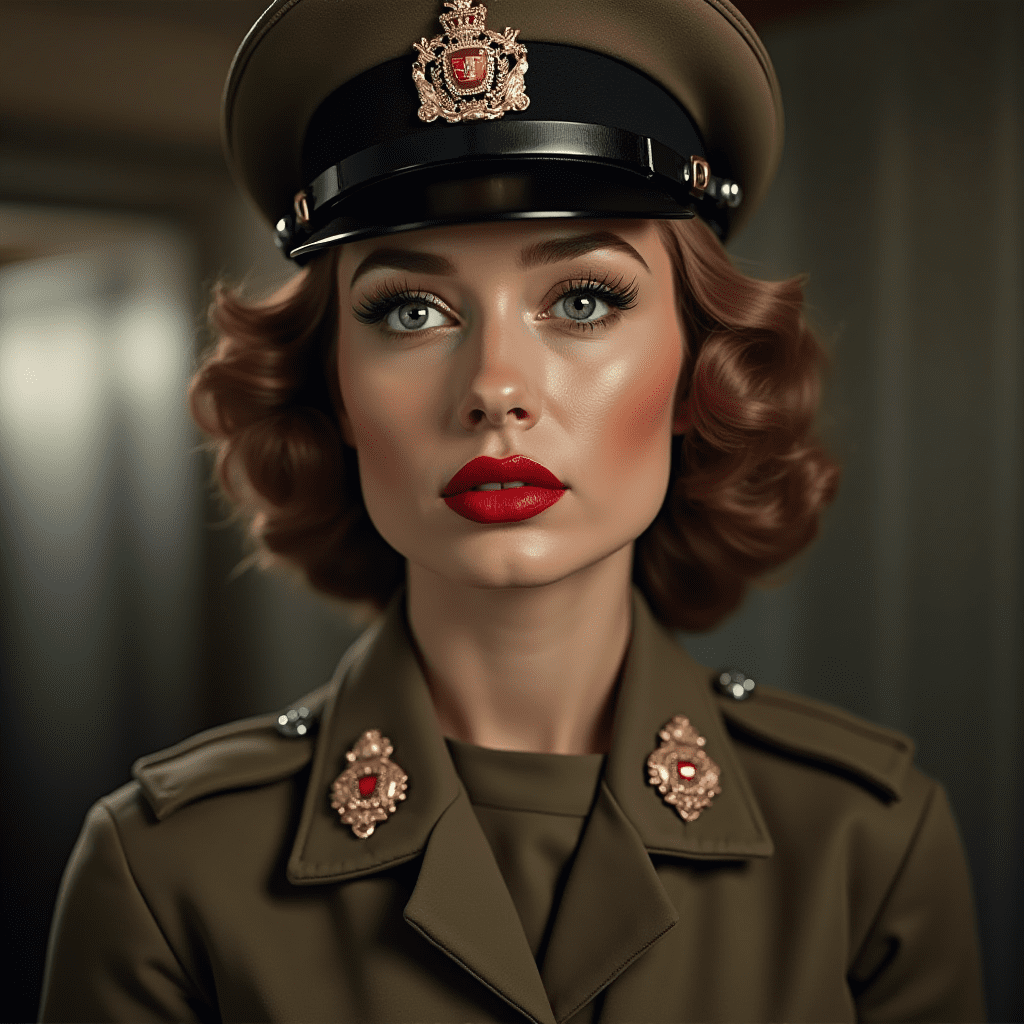
Picture this: a London street, bombed-out buildings still smoldering, the air thick with the scent of smoke and fear. Yet, amidst the devastation, a woman walks by, head held high. Her uniform is crisp, her posture determined, and on her lips? A bold, defiant slash of brilliant red lipstick. This wasn’t just makeup; it was a statement.
It’s a story that sounds almost too good to be true, a stylish act of rebellion in the face of unimaginable darkness. But for many women during World War II, the act of wearing red lipstick was precisely that: a silent, yet powerful, protest against the forces that threatened their very way of life.
The idea that a dictator, a man who commanded armies and reshaped continents, could be so repulsed by a cosmetic seems almost comical. But the truth is, Adolf Hitler genuinely detested red lipstick. He saw it as a symbol of decadence, of frivolousness, and perhaps, most disturbingly to him, of American influence and independence. In his eyes, it represented everything he wanted to eradicate from the world he envisioned.
And that, my friends, is where the story truly takes flight. Because what do you do when the enemy utterly despises something? You embrace it. You amplify it. You make it your emblem of defiance.
As the war raged on, particularly in the United States and Britain, red lipstick became more than just a beauty product. It transformed into a symbol of national pride and a subtle, yet potent, weapon of psychological warfare. Think about the morale boost it provided. In times of rationing, blackouts, and constant anxiety, that little tube of color could offer a precious moment of normalcy, a touch of glamour, and a flicker of hope.
The women who wore it weren’t just looking to feel pretty. They were sending a message. To the enemy, it screamed, “We will not be broken. We will not surrender our spirit.” To their fellow citizens, it whispered, “We are strong. We are resilient. We are still here.” It was a way to reclaim a sense of self and agency in a world that was trying to strip it all away.
Consider the context. Propaganda was a massive part of the war effort. Every image, every poster, every radio broadcast was designed to sway public opinion and bolster spirits. While soldiers fought on the front lines, women on the home front found their own ways to contribute to the war machine. And sometimes, those contributions were as colorful as a tube of ‘Victory Red’.
Beauty brands, sensing the mood and the opportunity, leaned into this sentiment. They marketed their red lipsticks as patriotic shades. Names like ‘Patriot Red’, ‘Victory Red’, and ‘Bombshell Red’ became popular. These weren’t just marketing ploys; they were tapping into a genuine feeling of solidarity and defiance that was sweeping across the Allied nations.
Imagine the women working in factories, their hands stained with grease and oil, taking a moment to apply a touch of red before heading home. Imagine the nurses, tending to the wounded, their faces etched with exhaustion, but their lips a beacon of color. Imagine the women selling war bonds, their smiles bright and their lips a vivid reminder of what they were fighting for – a world where such simple expressions of joy and individuality were not only tolerated but celebrated.
This wasn’t just a phenomenon in the United States where Hollywood glamour often dictated trends. In Britain, despite stricter rationing and a more somber atmosphere, the spirit of defiance through beauty was still present. While perhaps not as widespread as in the US, the act of wearing red lipstick still carried that unspoken message of resilience.
The story of red lipstick during WWII is a powerful reminder that resistance can take many forms. It doesn’t always involve grand gestures or violent confrontation. Sometimes, it’s about the quiet determination to maintain one’s identity, one’s spirit, and one’s sense of self, even when facing the most oppressive forces imaginable. It’s about finding beauty and strength in the smallest of things.
The narrative around this particular shade of lipstick gained even more traction thanks to figures like Princess Elizabeth (later Queen Elizabeth II), who was photographed wearing red lipstick during wartime. This royal endorsement, even if for personal reasons, lent further legitimacy and visibility to the trend, making it even more of a national symbol.
It’s fascinating to think about how a fashion choice, something seemingly superficial, could become so deeply intertwined with the grand narrative of a world war. It highlights the human need for expression, for a connection to normalcy, and for tangible ways to assert one’s identity in the face of overwhelming chaos. The women of the Allied nations, by choosing to wear red lipstick, were not just adhering to a beauty trend; they were actively participating in a subtle, yet profound, act of psychological warfare and personal liberation.
So, the next time you see a woman confidently wearing a bold red lip, take a moment to appreciate the history behind it. It’s a legacy that stretches back to a time of global conflict, a time when a swipe of color was a declaration of courage, a symbol of unwavering spirit, and a whispered “no” to tyranny. It’s a reminder that even in the darkest of times, beauty and defiance can bloom.
This vibrant chapter in history teaches us that the human spirit is remarkably resilient, and that sometimes, the most powerful statements are made with the simplest of tools. The story of red lipstick during WWII is a testament to that enduring truth, a reminder that beauty can be a battlefield, and a symbol of unwavering strength.
What do you think about this incredible piece of history? Have you ever felt like your personal style was a form of expression or defiance? Share your thoughts in the comments below!