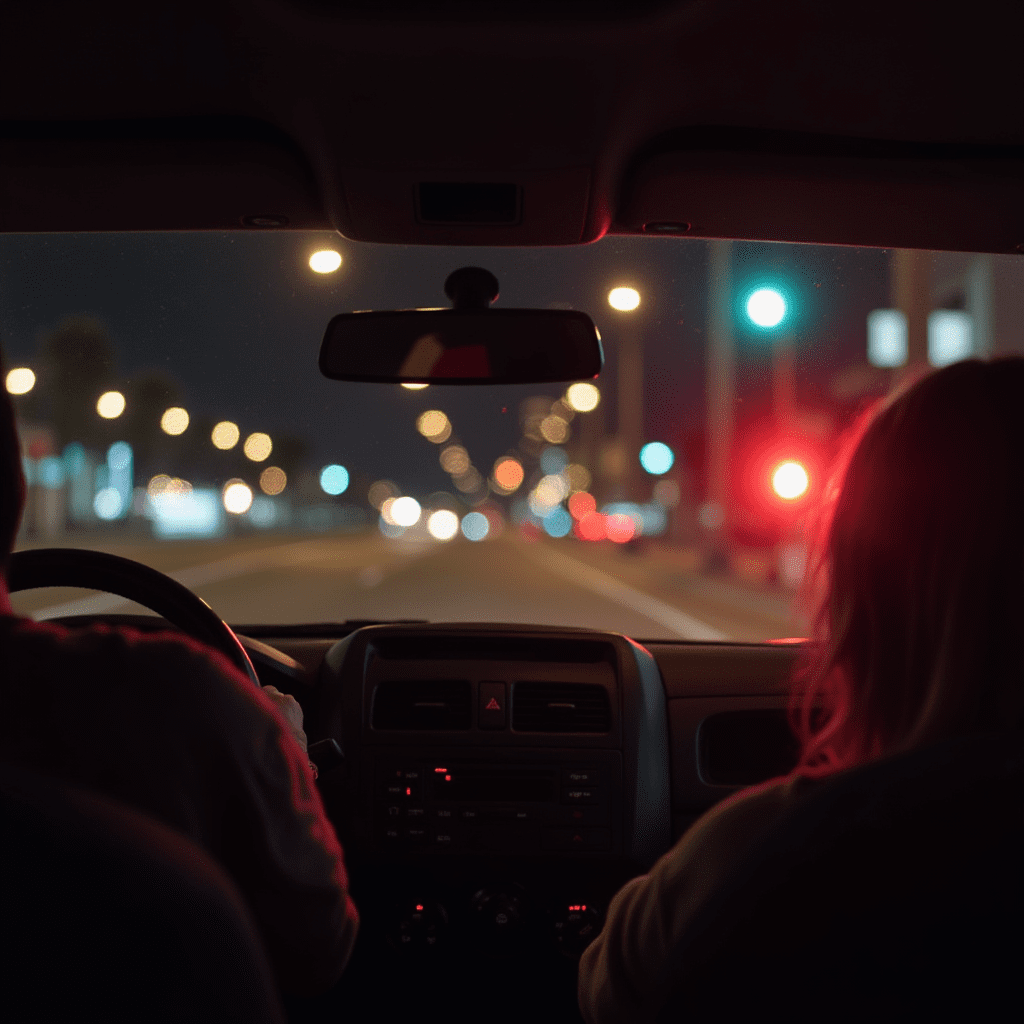
Close your eyes for a second. No, really, do it. Picture yourself somewhere amazing. Maybe that beach you’ve always dreamed of, or perhaps a cozy cabin in the mountains. Now, imagine you’re suddenly yanked back to your car, engine humming, foot hovering over the brake. You’re stuck. Not by traffic, not by a breakdown, but by a simple, ubiquitous, infuriating red light.
Now, open your eyes. Because that’s where a staggering amount of our lives are spent. We’re talking about the average person, you and me, us. And the number? It’s enough to make your jaw drop: six months. Six months. That’s half a year. A significant chunk of our existence, literally vanishing into thin air, or rather, into traffic signal cycles.
Think about it. Six months. What could you do with an extra six months? Learn an instrument? Master a new language? Travel the world (without the red lights, of course)? Spend quality time with loved ones? Build that treehouse you always wanted? The possibilities are endless, and yet, they’re silently being… red-lit.
It’s not something we usually dwell on. We grumble, we sigh, we tap our fingers on the steering wheel. We might even sing along loudly to the radio to pass the time. But do we truly grasp the cumulative effect of these countless, seemingly insignificant pauses? Each red light is a tiny thief, stealing seconds, then minutes, then hours, until they add up to a monumental loss of our most valuable resource: time.
Let’s paint a picture. Sarah is a busy mom who commutes 45 minutes each way to work. She’s also constantly ferrying her kids to soccer practice, music lessons, and birthday parties. Her days are a blur of activity. But what she doesn’t consciously track are those moments at intersections. The 30 seconds here to get to the grocery store, the minute there waiting for the light to change before picking up her son from school, the extra couple of minutes adding up on her daily commute.
Her friend, Mark, is a freelance graphic designer. He’s often on the go, meeting clients across town. He prides himself on efficiency and punctuality. Yet, he’s often found drumming his fingers on his steering wheel outside a cafe or a client’s office, waiting for that magical green glow. He might be mentally sketching out a new design, but the physical reality is that he’s stationary, his vehicle idling, his progress halted.
When we break it down, it’s less about the individual red light and more about the symphony of stops that orchestrate our daily journeys. Consider the simple act of driving to the local park. You might encounter three or four red lights on a short trip. Multiply that by every car trip you take in a week, a month, a year. It builds up faster than you can imagine.
This isn’t just about the inconvenience. It’s about the lost opportunities. Think of all the conversations that could have been had, the ideas that could have been brainstormed, the moments of pure, unadulterated enjoyment that are sacrificed at the altar of the traffic signal. That moment of connection with your child asking about their day, the quiet contemplation that might lead to a breakthrough idea – all can be interrupted by the stop-and-go rhythm of urban driving.
It’s a statistic that’s hard to swallow because it’s so undeniably real. We’re all living it, every single day. The sheer volume of time spent waiting is a testament to our modern infrastructure, but also a stark reminder of how much of our lives are dictated by external forces beyond our immediate control. This is especially true for those who rely on personal vehicles for their daily lives, making the impact of everyday traffic lights even more profound.
Think about the economic implications too. While we’re not directly paying for each red light, the aggregate effect on productivity, fuel consumption, and even the wear and tear on our vehicles is substantial. Businesses lose money when employees are delayed. Delivery services face increased costs. It’s a ripple effect that extends far beyond the individual driver.
So, what do we do with this knowledge? Do we simply resign ourselves to spending half a year of our lives staring at blinking red lights? Or can we start to reclaim some of that lost time? It’s a fascinating question that prompts us to look at our daily routines with fresh eyes. Could a slight adjustment in our departure times make a difference? Are there alternative routes that might, on average, offer fewer interruptions?
Perhaps it’s about shifting our mindset. Instead of viewing every red light as an annoyance, could we, in those moments, choose to engage in something mindful? A brief meditation, a quick check-in with our senses, or simply appreciating the quiet pause in our otherwise hectic lives. It’s about finding small pockets of presence amidst the inevitable pauses.
And for those who have the flexibility, exploring alternatives to single-occupancy vehicle travel becomes even more appealing. Public transportation, carpooling, cycling, or even walking for shorter distances can significantly reduce your personal exposure to the red light phenomenon. Imagine the collective impact if even a fraction of us made those shifts. It’s not just about personal gain; it’s about reshaping our communities and our relationship with mobility.
The six-month statistic is more than just a number; it’s a call to awareness. It’s a gentle nudge to consider how we’re spending our days, our weeks, our years. It’s an invitation to be more intentional with our time, to seek out experiences that truly nourish us, and to perhaps, just perhaps, find ways to navigate our journeys with a little less waiting and a lot more living.
So, the next time you find yourself at a red light, take a moment. Breathe. Consider the six months. And then, when that light turns green, drive on, maybe with a slightly different perspective. The road ahead is yours to travel, and every moment counts. Let’s try to make the most of it, one green light at a time.