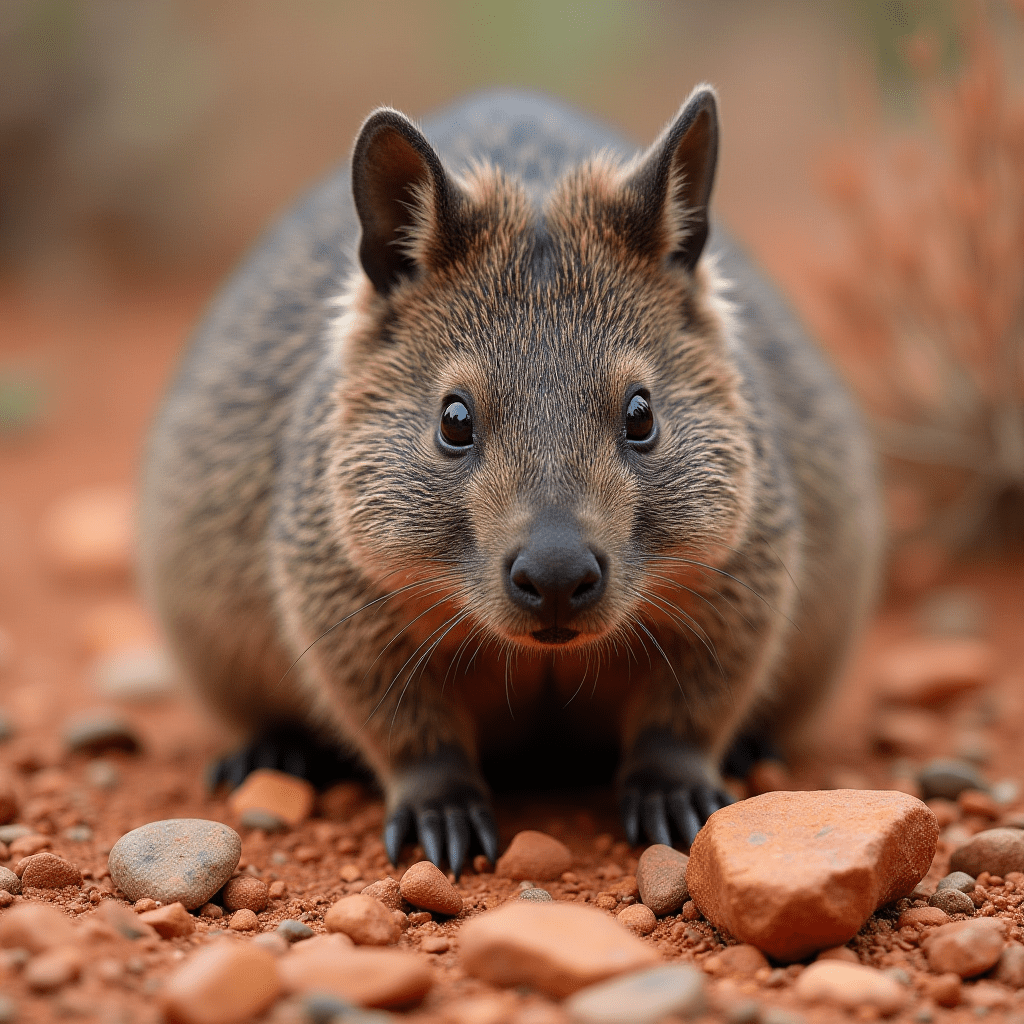
Imagine this: you’re out for a bushwalk in Australia, soaking in the eucalyptus-scented air, maybe spotting a kangaroo or two. Then, you stumble upon something truly bizarre. Not a strange flower, not an unusual rock, but… perfectly formed, tiny cubes. Scattered across the forest floor. Your first thought might be, ‘Did someone drop their building blocks?’ But no, my friends, this is the incredible, the unbelievable, the utterly factual work of a wombat.
Yes, you read that right. Wombats, those stocky, burrowing marsupials, are the architects of cube-shaped poop. It’s not just a rare anomaly; it’s their signature. And for a long time, scientists were as baffled as you might be right now. How on earth does nature craft a perfect cube from… well, from digested vegetation?
For centuries, this quirky biological fact was a bit of a running joke among zoologists. It was one of those weird animal trivia bits that made you chuckle but didn’t really get a serious explanation. But nature, as it often does, has a way of revealing its secrets to those who are patient and observant. And a few dedicated researchers decided this cubic conundrum deserved some serious investigation.
Picture a wombat. They’re not exactly known for their delicate digestive systems. They’re built for tough work, for digging extensive burrows, for surviving on hardy grasses and roots. Their diet is rough, and their digestive process is, shall we say, thorough. They munch and munch, and then their bodies get to work breaking down all that fibrous material.
Now, the usual story with most animals’ droppings is a nice, round, or perhaps elongated form. Think of a rabbit’s little pellets, or the more traditional log-like droppings of many mammals. But the wombat? They’re in a league of their own.
The breakthrough in understanding came when scientists started to really look at the *process* inside the wombat. It wasn’t just about what went in, but how the animal’s digestive tract worked its magic. They discovered that the wombat’s intestines have a unique elasticity and varying firmness in their walls.
Think of it like this: as the food makes its way through the lengthy intestinal tract, it’s being squeezed and molded. The key isn’t just the musculature, but the *way* it squeezes. The intestines have stiff sections and flexible sections, and this variation plays a crucial role in shaping the feces.
As the digestive process nears its end, the material is quite dry and firm. The intestinal walls, with their clever design, apply pressure in specific ways. Imagine squeezing a tube of toothpaste, but with more nuanced control. The contractions aren’t uniform. They’re more like a series of presses and pushes that sculpt the material.
This differential pressure, combined with the texture and dryness of the waste, causes it to form into distinct segments. And these segments, as they exit the body, are remarkably cube-like. It’s a biological feat of engineering, a testament to the incredible adaptations that evolution can produce.
But why cubes? Why not spheres or pyramids? This is where the social life of wombats comes into play. Wombats are territorial animals. They mark their territory using their scent, and their droppings are a vital part of this communication system.
If you’ve ever seen a wombat latrine – a prominent pile of scat used for marking territory – you’ll notice they often place these cubes on elevated spots like rocks or logs. This makes them more visible and allows their scent to spread further.
Now, imagine trying to stack round or slippery droppings on a rock. They’d just roll off. Cubes, however, are inherently stable. They can be piled up neatly, creating a more effective and long-lasting territorial marker. It’s a practical solution to a very specific need.
So, the cube shape isn’t just a random quirk; it’s a functional adaptation that helps wombats communicate, establish their boundaries, and maintain their social order. It’s a little piece of poop with a big purpose.
This discovery has also sparked interest in other fields. Researchers are looking at the mechanics of how these cubes are formed, drawing parallels to how engineers might design machines to create specific shapes or how materials can be molded under pressure.
It’s a reminder that even the most seemingly mundane aspects of the natural world can hold complex and fascinating scientific principles. Wombat poop, in all its cubic glory, is a perfect example of this.
So, the next time you’re down under, and you happen to see some unusual little squares on the path, don’t just dismiss them as oddities. Take a moment to appreciate the incredible biology at play. You’re looking at a masterpiece of natural engineering, a testament to the ingenuity of wombats and the wonders of the animal kingdom.
It’s a story that started with a peculiar observation and ended with a deeper understanding of animal behavior, physiology, and the elegant solutions that nature provides. The wombat, the burrowing marvel, continues to surprise and delight us, one cube at a time.
What other incredible, bizarre, or downright wonderful animal facts have you stumbled upon? We’d love to hear them in the comments below! And if you found this story as fascinating as we did, give it a share – let’s spread the word about the amazing wombat poop phenomenon!