
The world tilted. One moment, everything was ordinary, the next, it was a kaleidoscope of chaos, noise, and sheer terror. Time seemed to stretch and contort, each second an eternity of dread. Then, silence. A ringing silence that felt louder than any explosion.
In the aftermath, the mind becomes a battlefield. Memories flicker, intrusive thoughts ambush, and the simple act of breathing can feel like a monumental effort. This is the shadow of trauma, a darkness that can linger, threatening to consume everything in its path. This is where the story of preventing Post-Traumatic Stress Disorder (PTSD) often begins, not with grand pronouncements, but with a quiet, unexpected quest for order.
Sarah’s world had fractured. The car crash was sudden, brutal, and left her with more than just physical bruises. The images replayed endlessly, the sounds echoed in her ears, and sleep offered no escape, only nightmares that mirrored the terror of the event. Doctors spoke of support, therapy, and time. But for Sarah, time felt like an enemy, each passing moment a potential anchor for the trauma to solidify its grip.
Her therapist, Dr. Evans, had a reputation for thinking outside the box. He listened patiently to Sarah’s fragmented descriptions, her fear of the intrusive memories, and her desperate need to regain a sense of control. He didn’t dismiss her feelings or offer platitudes. Instead, he offered a peculiar suggestion.
“Sarah,” he began, his voice calm and steady, “I want you to try playing Tetris.”
Sarah blinked. Tetris? The game with the falling blocks she’d played on a clunky old computer years ago? It seemed absurd. How could stacking coloured shapes possibly help with the shattered pieces of her life? She voiced her confusion, expecting a gentle redirection back to more conventional therapeutic avenues.
Dr. Evans smiled faintly. “It might sound strange, but bear with me. After a traumatic event, the brain is flooded with sensory information. It’s trying to process everything that happened, and sometimes, it gets stuck. This can lead to those intrusive memories and flashbacks. What Tetris does, in a very simplified way, is engage a different part of your brain. It requires focus, spatial reasoning, and a different type of visual processing.”
He explained that the act of playing Tetris, especially in the immediate aftermath of a traumatic incident, could act as a sort of ‘cognitive buffer’. By actively engaging the visual-spatial areas of the brain, it could disrupt the brain’s tendency to replay and solidify the traumatic memories. It’s like offering the brain a compelling, yet manageable, puzzle to solve, diverting its attention from the overwhelming and terrifying real-life puzzle it’s struggling with.
The theory, he elaborated, was rooted in how our brains process information. Traumatic memories are often encoded in a fragmented, sensory-rich way. By redirecting processing power to a task like Tetris, which demands organization and pattern recognition, the brain might be less likely to revisit and solidify the traumatic event’s details. It’s not about forgetting; it’s about preventing the trauma from being etched so deeply into the memory pathways that it causes lasting distress.
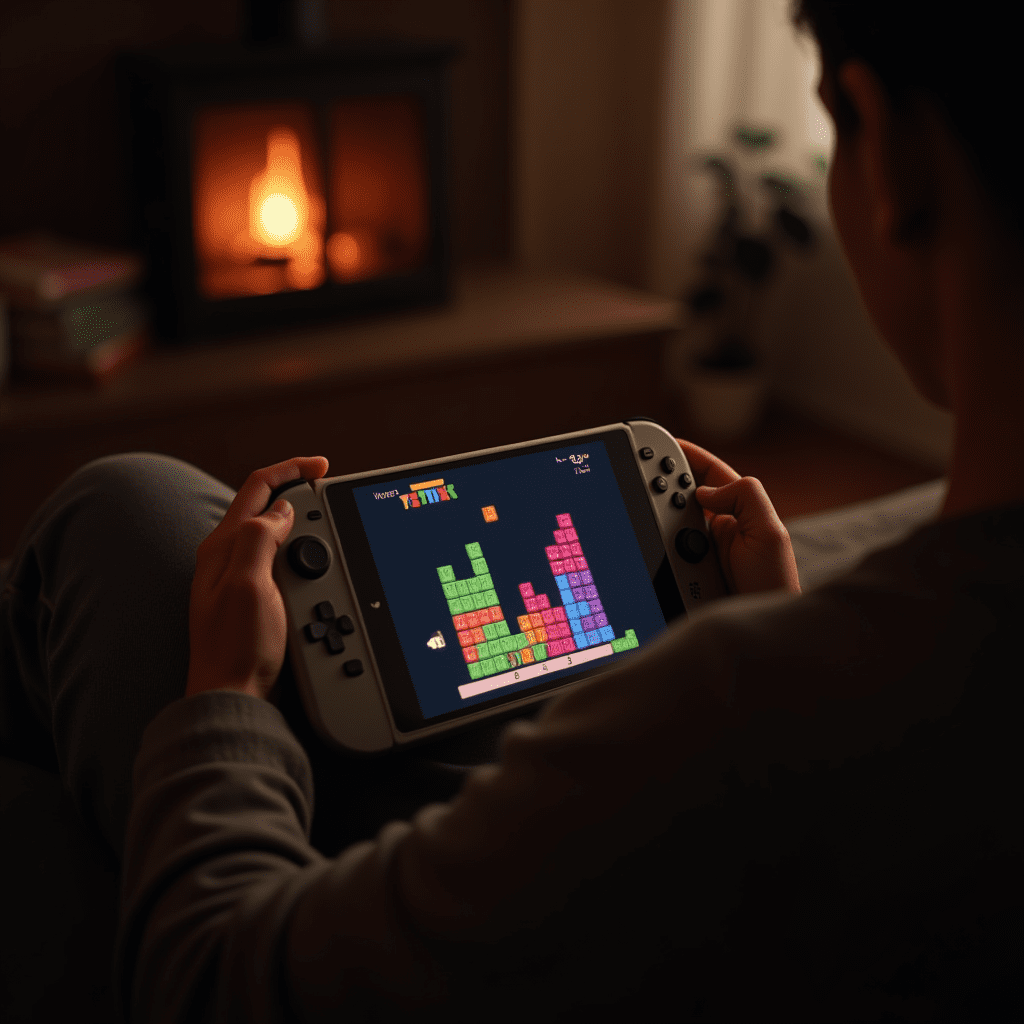
Skeptical, but desperate for any reprieve, Sarah downloaded a Tetris app. The familiar music filled her small apartment, a stark contrast to the storm raging within her. At first, it was difficult. Her mind would drift back to the screech of tires, the shattering glass. But she forced herself to focus on the descending blocks, the need to rotate and fit them into place.
Slowly, something shifted. The game demanded her attention. The challenge of clearing lines, of building a stable structure, became a small, tangible victory. Each cleared line was a tiny moment of order in the chaos. The intrusive thoughts began to recede, not disappearing entirely, but losing some of their sharp, piercing edges. They were still there, but they weren’t dominating her entire consciousness anymore.
She found herself looking forward to her Tetris sessions. It became a ritual, a way to anchor herself in the present. The falling blocks, once a symbol of impending doom in her mind’s eye, began to represent a steady, predictable rhythm. This rhythmic engagement, this active focus on a solvable problem, was proving to be a surprisingly powerful tool in her journey toward healing.
This isn’t to say Tetris is a magic cure. Dr. Evans stressed that it’s a supplementary tool, particularly effective in the initial hours and days following a trauma. Professional therapy remains crucial for processing the event, developing coping mechanisms, and addressing the deeper emotional impact. But for Sarah, and many others who have found similar relief, Tetris offered a vital bridge, a way to navigate the immediate aftermath without being completely overwhelmed.
The science behind this phenomenon is fascinating. Researchers have explored the concept of ‘disruptive memory processing’ and how engaging in activities that require high cognitive load and visual-spatial skills can interfere with the consolidation of traumatic memories. Think of it as giving your brain a demanding, yet harmless, task to focus on, effectively crowding out the space where the traumatic memories are trying to set up permanent residence.
It’s a testament to the resilience of the human mind and its incredible capacity to find unexpected pathways to recovery. In a world that often feels unpredictable and overwhelming, the simple, structured world of Tetris can offer a surprising sanctuary, a place where falling blocks can symbolize not fragmentation, but the gradual rebuilding of order and peace. If you or someone you know has experienced a traumatic event, consider reaching out for professional help. And perhaps, just perhaps, try a game of Tetris.
This approach highlights how simple, accessible activities can play a significant role in mental well-being, particularly in the critical window after a distressing experience. It’s a reminder that sometimes, the most profound forms of healing can come from the most unexpected places, even from a game designed to stack falling blocks. ForRealPost believes in sharing these insights to empower our community.