
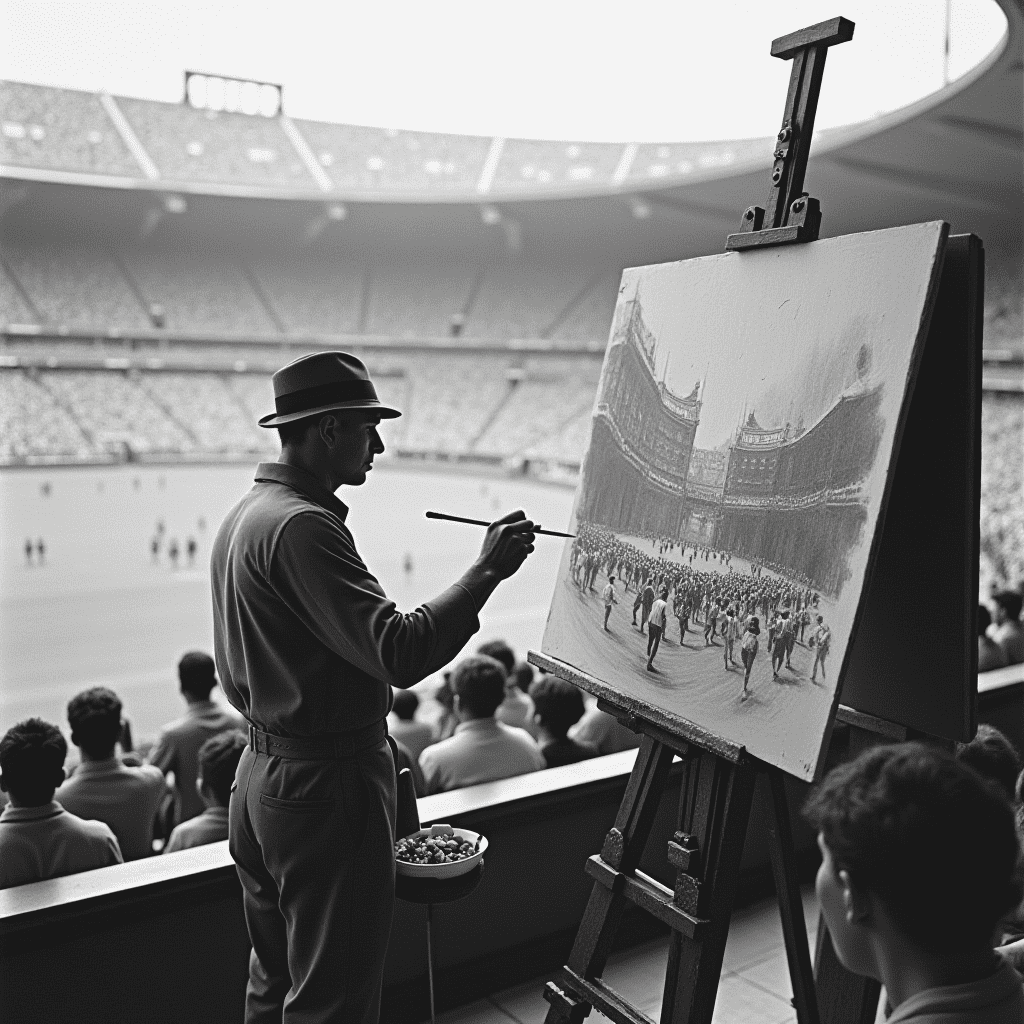
Picture this: Paris, 1924. The roar of the crowd isn’t for a sprinter crossing the finish line, but for a sculptor unveiling their masterpiece. The air vibrates, not with the thud of discus, but with the silent, intense pressure of creation. Believe it or not, this wasn’t a fever dream; for decades, art was a legitimate, medal-winning event at the Olympic Games.
Yes, you read that right. The Olympics, the pinnacle of athletic achievement, once celebrated painters, sculptors, architects, musicians, and writers. Imagine Picasso battling it out against Matisse for a gold medal in painting, or Rodin’s David facing off against Michelangelo’s David in a sculpture showdown. The thought alone is enough to make your head spin, isn’t it?
This fascinating chapter in Olympic history began at the 1912 Stockholm Games and continued until 1948 in London. The brainchild of Baron Pierre de Coubertin, the founder of the modern Olympics, it was an attempt to revive the ancient Greek ideal of a harmonious blend of mind and body. The ancient Olympians weren’t just athletes; they were poets and artists too.
Coubertin believed that true athleticism extended beyond physical prowess. He envisioned a competition that honored intellectual and artistic pursuits alongside sporting ones. It was a grand, ambitious idea, rooted in a romantic notion of the Renaissance man – someone skilled in both the liberal arts and physical endeavors.
So, how did it work? Artists submitted their works, which were judged by panels of esteemed experts, much like a contemporary art exhibition. The key difference? These works were judged within the context of the Olympic Games, alongside the track stars and swimmers, and the winning pieces were awarded Olympic medals.
The categories were diverse and intriguing. There were medals for painting, sculpture, architecture, literature, and music. These weren’t just for creating *art about* sports, mind you. The art itself had to be original and inspired by sport or physical activity. So, a painting of a runner mid-stride, a bronze statue of a swimmer diving, or even an architectural blueprint for a stadium could enter the running.
Think about the pressure. Imagine a painter meticulously layering oils, knowing their work would be scrutinized not just for aesthetic merit but also for its connection to the Olympic spirit. Or a composer painstakingly crafting a symphony, hoping its crescendo would echo the triumph of a victorious athlete.
The sheer variety of entries is astounding. In 1912, a Swedish sculptor, Erik Fougner, won a bronze medal for his work titled ‘Archers.’ At the same time, a German architect named Josef Hoffmann took home a silver for his stadium design. It’s a stark contrast to the singular focus on physical feats we see today.
The literary competitions were particularly unique. Imagine writers submitting epic poems about the marathon or dramatic plays inspired by the spirit of competition. The music categories featured symphonic poems and odes dedicated to athletic prowess. It was a truly multidisciplinary celebration of human achievement.
One of the most celebrated artistic Olympians was John C. Weaver, an American athlete who also happened to be a formidable painter. He won a gold medal in painting at the 1932 Los Angeles Olympics for his work ‘Wrestling.’ This wasn’t just a hobby for Weaver; it was a recognized skill that earned him Olympic hardware.
Another fascinating figure was Nico Rienstra, a Dutch sculptor whose work ‘The Cyclist’ earned him a bronze medal in 1948. His sculpture captured the dynamic energy and dedication of an athlete in motion, a perfect embodiment of the art category’s spirit.
The process wasn’t without its complexities. Judging criteria often blurred the lines between artistic merit and how well the piece represented the Olympic ideal. There were debates about whether a technically brilliant but emotionally flat piece should triumph over a more expressive but less refined one.
The architecture competitions, for instance, often saw entries that were purely conceptual, blueprints for unrealized structures. This raised questions about what constituted a finished work worthy of an Olympic medal. It was a brave experiment, pushing the boundaries of what an athletic competition could encompass.
Despite its noble intentions, the experiment of artistic Olympiads eventually faded. The logistical challenges of judging and categorizing diverse artistic works alongside traditional sports grew. The Olympic Games, as they evolved, began to emphasize the purely physical aspects of competition, becoming more specialized and commercialized.
By the mid-20th century, the focus shifted. The world of professional sports was growing, and the demands on athletes and organizing committees became immense. The artistic competitions, while cherished by those involved, were eventually deemed too different from the core athletic mission.
The last art medals were awarded in London in 1948. After that, the curtain fell on this extraordinary era. The dream of a unified celebration of human physical and creative genius, at least on the Olympic stage, was largely set aside.
But the legacy remains. It’s a reminder that the pursuit of excellence takes many forms. It encourages us to think beyond the conventional definitions of competition and to appreciate the incredible breadth of human talent.
So next time you watch the Olympics, remember that for a time, the podium wasn’t just for sprinters and swimmers, but also for painters and poets. The world of competitive art at the Olympics was a vibrant, sometimes quirky, and ultimately inspiring chapter in the long and storied history of the Games.
It’s a story that sparks the imagination, doesn’t it? What if we brought back artistic competitions? Imagine the creativity that would flood in! It’s a thought-provoking piece of history that deserves to be remembered, a testament to a broader, more inclusive vision of what it means to be an Olympian.
What do you think about art being an Olympic sport? Would you have competed, or would you have been a spectator? Let us know in the comments below! We love hearing your thoughts on these amazing #ForRealPost stories.